
Six powerful systems for commercial real estate; one company behind them all.
Lending, valuation, servicing, accounting, budgeting, and asset management.

than you think
Chosen by the institutions that can't afford to get the numbers wrong.














Six systems for teams carrying the deal from term sheet to payoff
Run the whole deal in one record, from term sheet to payoff.
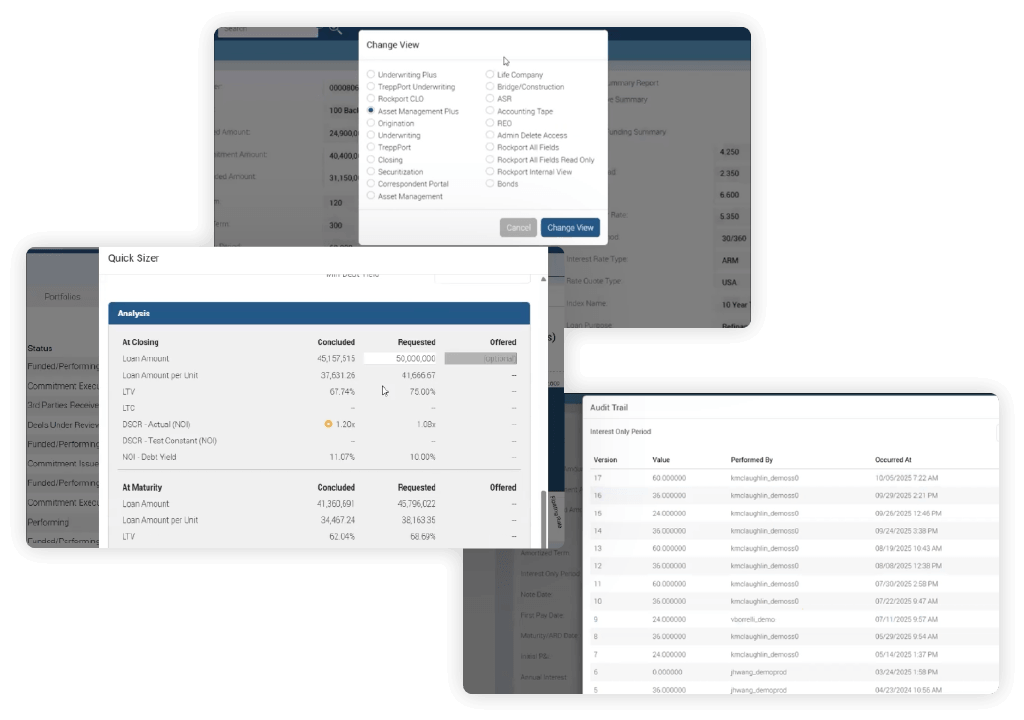
Rockport CORE handles origination, underwriting, closing and asset management in one system. Nothing is re-keyed between stages, and nothing lives only in a spreadsheet one person maintains.




Cash flow modeling built for people who do it all day.
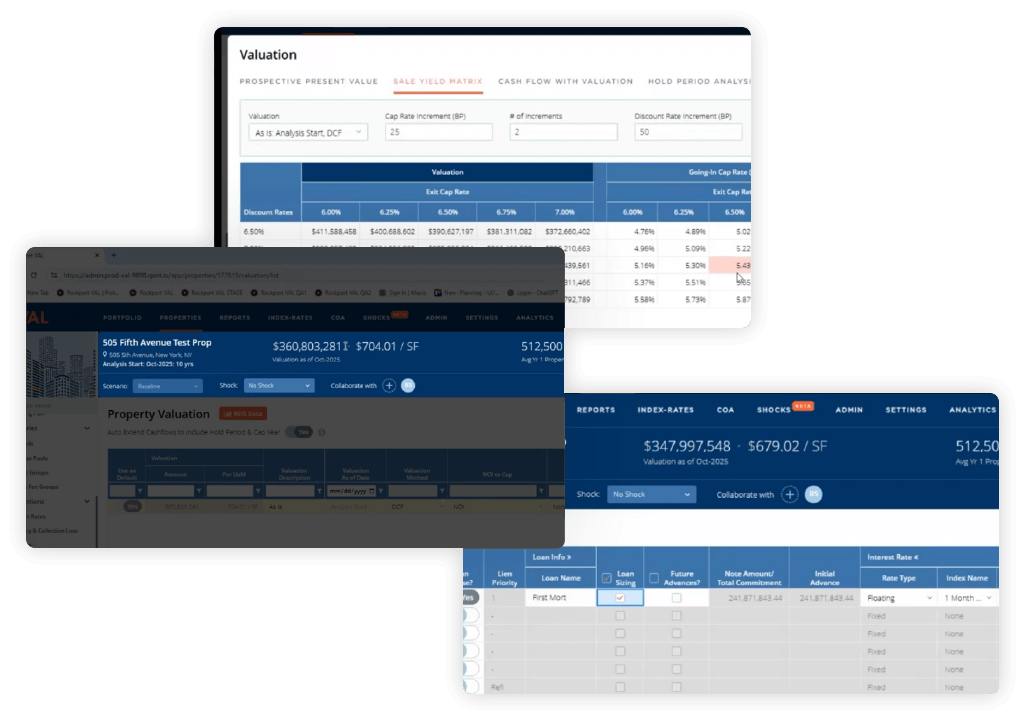
DCF and direct cap across every property type, with an Excel add-in and unlimited scenarios. Appraisers deliver models with confidence, lenders validate assumptions with full visibility, and investors test scenarios across the portfolio, all in one secure, cloud-based workflow.

The company behind your lending system also does your accounting.
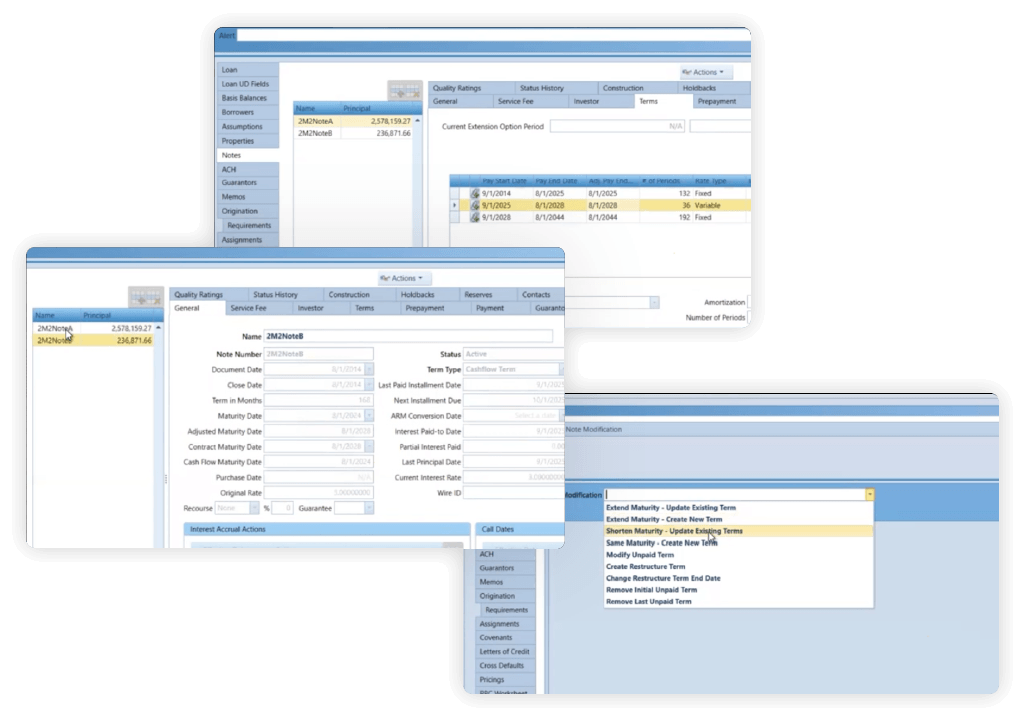
Rockport ACT handles servicing and accounting across GAAP, STAT, IFRS, TAX, MGMT and PGAAP, with general ledger interfaces built in. Same loan record as Rockport CORE, so servicing is not rebuilding the deal origination already booked.

Ag lending isn't like all other lending, and your system shouldn't pretend otherwise.
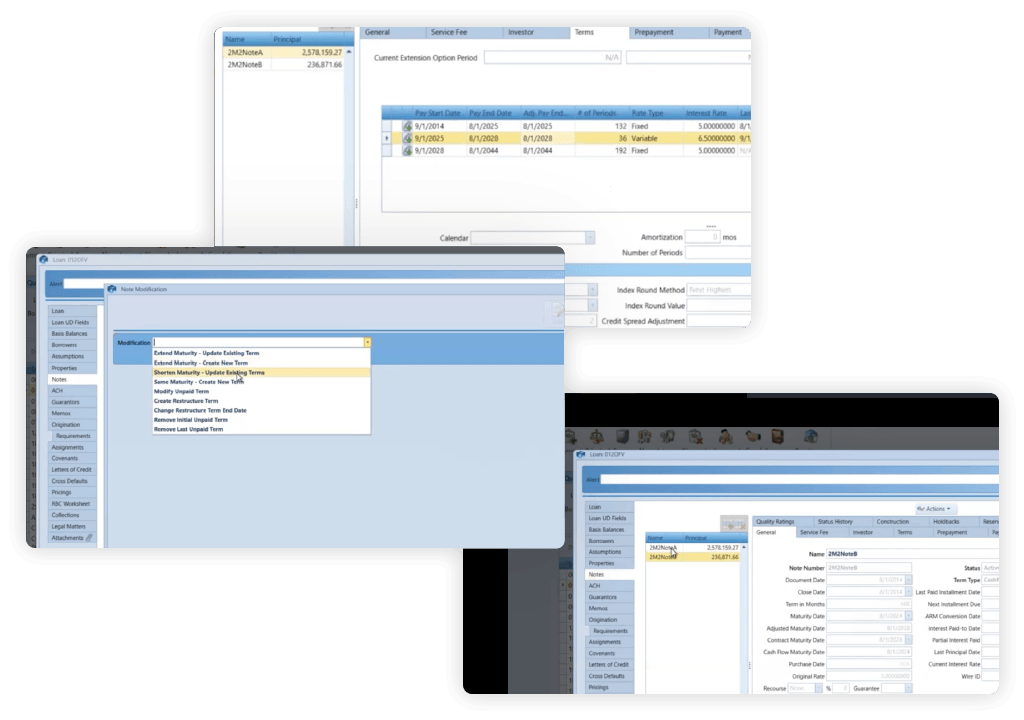
Rockport AG is built for the loan structures and servicing rules agricultural lenders actually work with, rather than a general commercial system with the fields renamed.
Budgets and reforecasts without the spreadsheet risk.
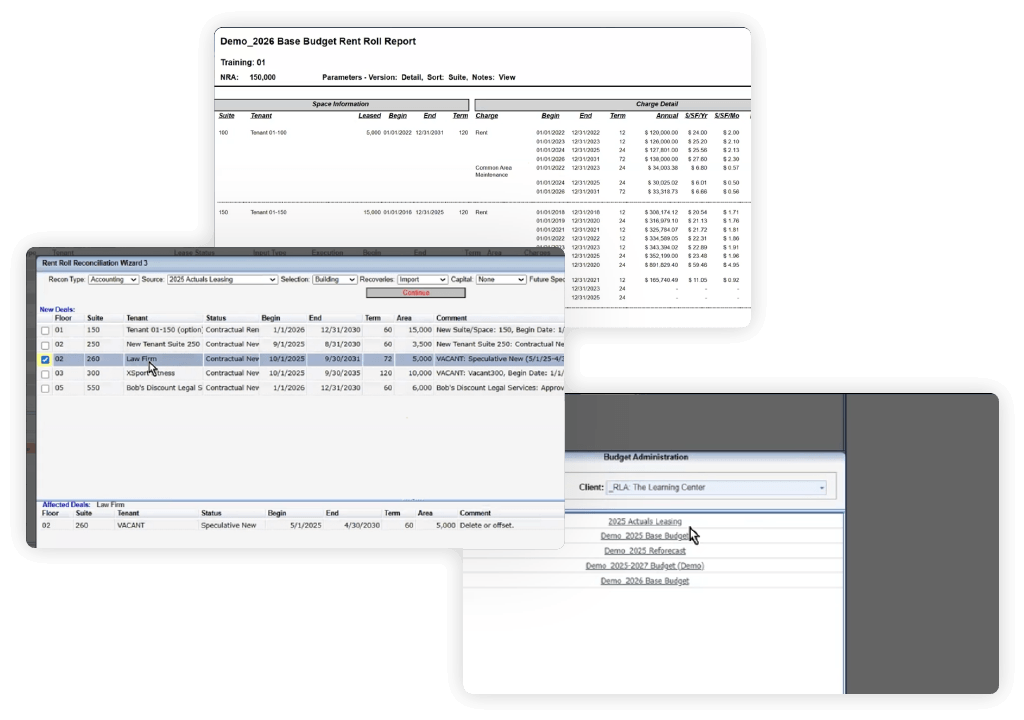
Budgets and reforecasts that sync daily with Yardi®, MRI® and JD Edwards. Overlay actuals without rebuilding the model, and let property managers, leasing, asset management and accounting work in the same budget at once, with no per-user cost.
Call Rockport's calculations from inside your own system.
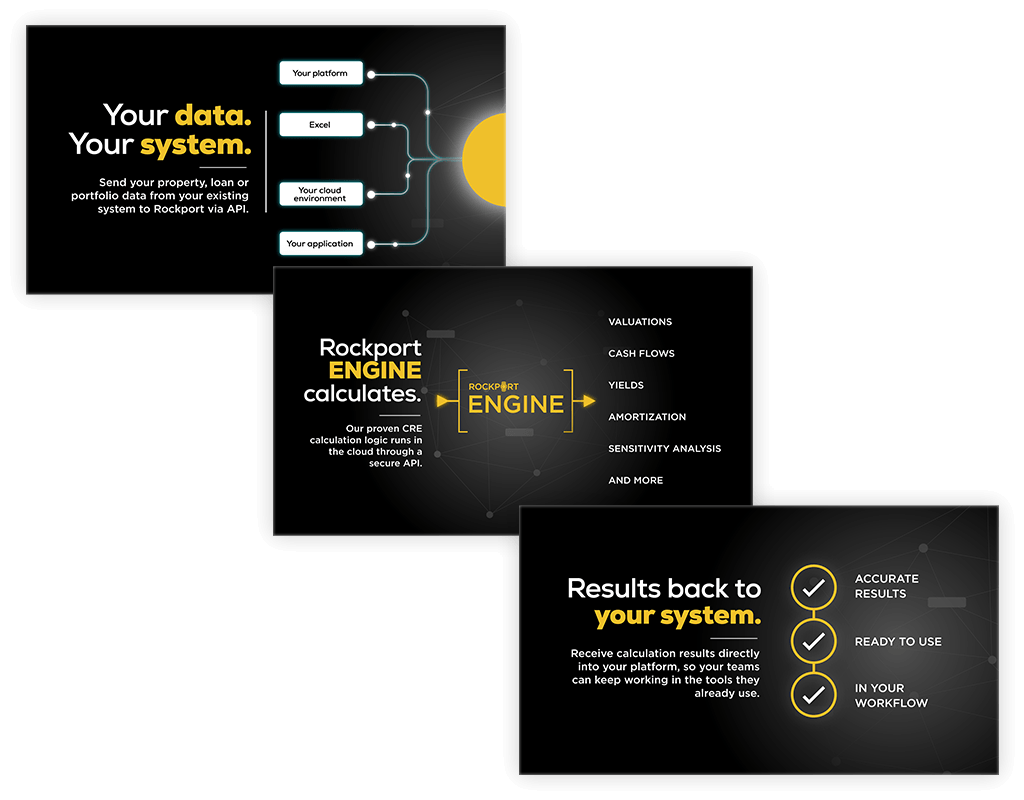
Rockport ENGINE exposes Rockport's CRE calculation logic through an API, so your platform runs the same maths Rockport's clients rely on. Nobody moves off the system they already use, and nobody rebuilds the model.
Three things people ask before they switch
Are they
credible?
"Rockport is a terrific partner, combining Commercial Real Estate acumen with technology excellence to deliver highly effective digital solutions."
Will they keep
building?
"When we asked them to build out additional functionality, they delivered on time and as promised."
Is it worth
switching?
"Their focus on 'service after the sale', not just getting you to signature, provides long-term value to W&D."
"We had a technology need, and the demo was outstanding, it was the best thing I had seen and it fit our solution, and once they got it set up, it never failed. They said they could do it, and they did it"
You don't have to replace what you already run
Rockport's systems work on their own and work better together. Most firms start with one, keep the platforms they already have, and connect the rest as it makes sense.
Start with one
product
Nothing here requires a suite decision. Every system is bought and run on its own.
Keep your existing
systems
APIs and integrations, not a rip-and-replace program.
Cleared by the institutions that
check hardest.
Rockport keeps a full audit record, so when a regulator or auditor asks how a number was reached, the answer is already there.
Built by the people who wrote the maths the industry now runs on.
Rick Trepp, founder of Trepp® and Rockport, has spent four decades building the systems commercial real estate finance depends on.
Buying enterprise software is a decision you live with for years. Here is how our CEO thinks about it.
"When you buy an enterprise platform, you are not really acquiring the version in front of you. You are entering a multi-year relationship with the team that will evolve as your business changes."
Co-Founder & Co-CEO, Rockport

Questions people ask before they call
What does Rockport do?

Rockport builds enterprise software for commercial real estate debt and equity. Its six systems cover loan origination and underwriting (CORE), cash flow modeling and valuation (VAL), loan servicing and accounting (ACT), agricultural lending and servicing (AG), property budgeting and reforecasting (BUDGET), and CRE calculations delivered by API into a firm's own platform (ENGINE). Rockport was founded in 2002 and works with more than 200 active clients, including Fannie Mae, Walker & Dunlop, Citigroup and BNY Mellon.
What is the difference between Rockport CORE and Rockport ACT?
Rockport CORE runs the loan up to and through closing: pipeline management, origination, underwriting, credit approval, portfolio management and closing. Once the loan closes, CORE also carries it into asset management. Rockport ACT handles servicing and accounting after funding, across six reporting bases: statutory, GAAP, PGAAP, tax, IFRS and management, with general ledger interfaces. Many lenders run both. In 2024, multiple insurance companies already using CORE adopted ACT.
Do I have to buy all six systems?
No. Each system is licensed and run on its own, and most firms start with one. Teams typically add a second or third when a neighboring team's work is already touching the same loan data.
Will Rockport work alongside the systems we already use?
Yes. Rockport is built to sit inside the stack you already run, taking data in and sending it back out.
Data in: Thousands of transactions are ingested every day through APIs and direct feeds: from your accounting and property management systems into BUDGET, and from your data warehouse and accounting and servicing systems into CORE.
Data out: Custom reporting through third-party report writers, APIs into your BI and internal systems, Excel, CSV and PDF reports, and automated pushes back to your data warehouse and accounting and servicing systems.
By product: CORE connects through two-way Excel integration, third-party report writers, accounting and servicing systems, data warehouses, and BI and internal systems. VAL runs through an Excel add-in and third-party report writers, pulls REIS market data, and connects to custom internal systems by API. BUDGET integrates with accounting systems including JD Edwards, MRI® and Yardi®.
Or keep your own platform entirely: Rockport ENGINE lets your existing system call Rockport's calculations directly through APIs, with no new interface to adopt.
Who uses Rockport?
Commercial lenders, including conduit and CMBS contributors, insurance companies and portfolio lenders, GSE and multifamily lenders, bridge and transitional lenders, and agricultural lenders. Valuation professionals, including bank review appraisal teams and fee appraisal firms. Property owners, investors and asset managers. And technology teams integrating CRE calculations into their own platforms.
How long has Rockport been building CRE systems?
Rockport was founded in 2002. It builds on work its founder, Rick Trepp, started in 1979, when he founded Trepp & Co and later built the CMBS data infrastructure the market still uses. Rockport has operated through the 2008 financial crisis, the 2020 disruption and the recent rate cycle.